Digital Nomads and the Future of Work
Harvard · 2015–2018
Role · Creator, researcher
How Might Digital Nomadism Become a Viable Future of Work? This study explored the implications of the rising ‘digital nomads’ working class — a relevant question for students and adults as the landscape of work changes and expectations of long-term positions shift.
The nomad movement is too young to know whether there are long-term implications of this career choice. We don’t know what would happen if after a while some people would want to reintegrate into the corporate world, and whether it’s going to be challenging for them. We don’t know whether this lifestyle choice is financially sustainable long-term and what the implications are for retirement, social life, and long-term family plans.
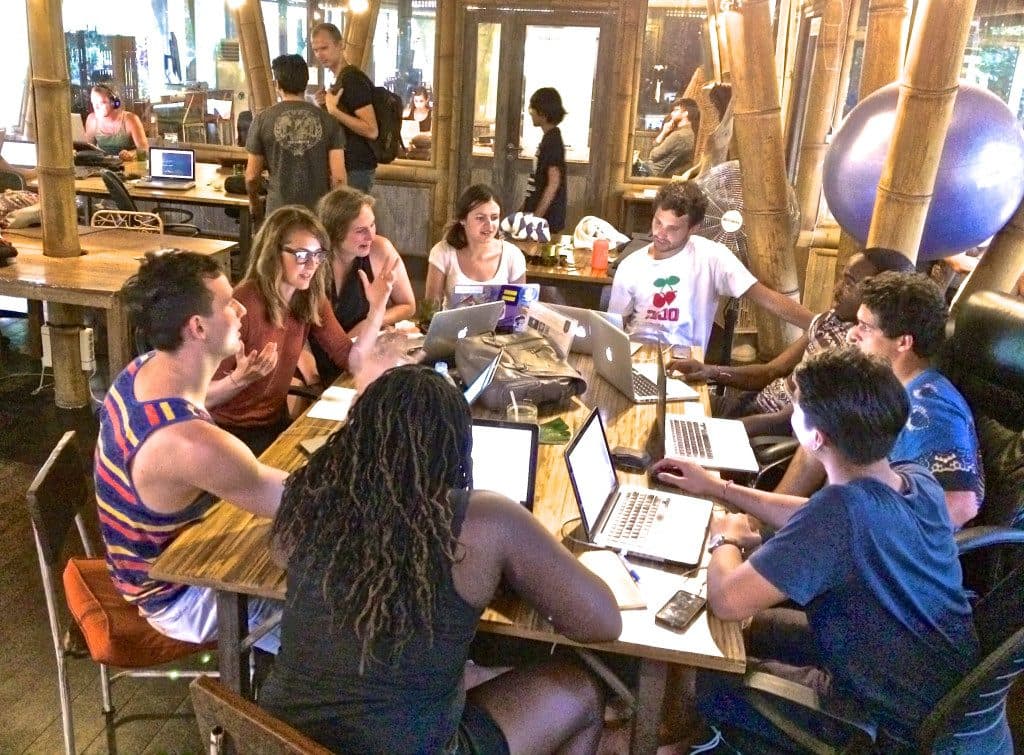
The project emerged from background fieldwork globally, followed by a winter term immersion course created for Harvard that focused on an unusually prolific and growing brick-and-mortar and digital nomad startup community in Ubud. Students immersed themselves in this community, using human-centered design methods to explore the area’s sustainable living practices and community- and sustainability-driven startups.
Research assistant: Daria Evdokimova. Written about in Forbes, Nomad List, Outside Magazine, The Wall Street Journal, and more.